
Cart
0
China’s Emission Cut Plans Criticized as Insufficient at UN Climate Summit
China pledged to cut emissions by only 7–10% by 2035 at the UN climate summit, drawing criticism from experts who warned the target falls far short of what is needed to tackle the crisis.
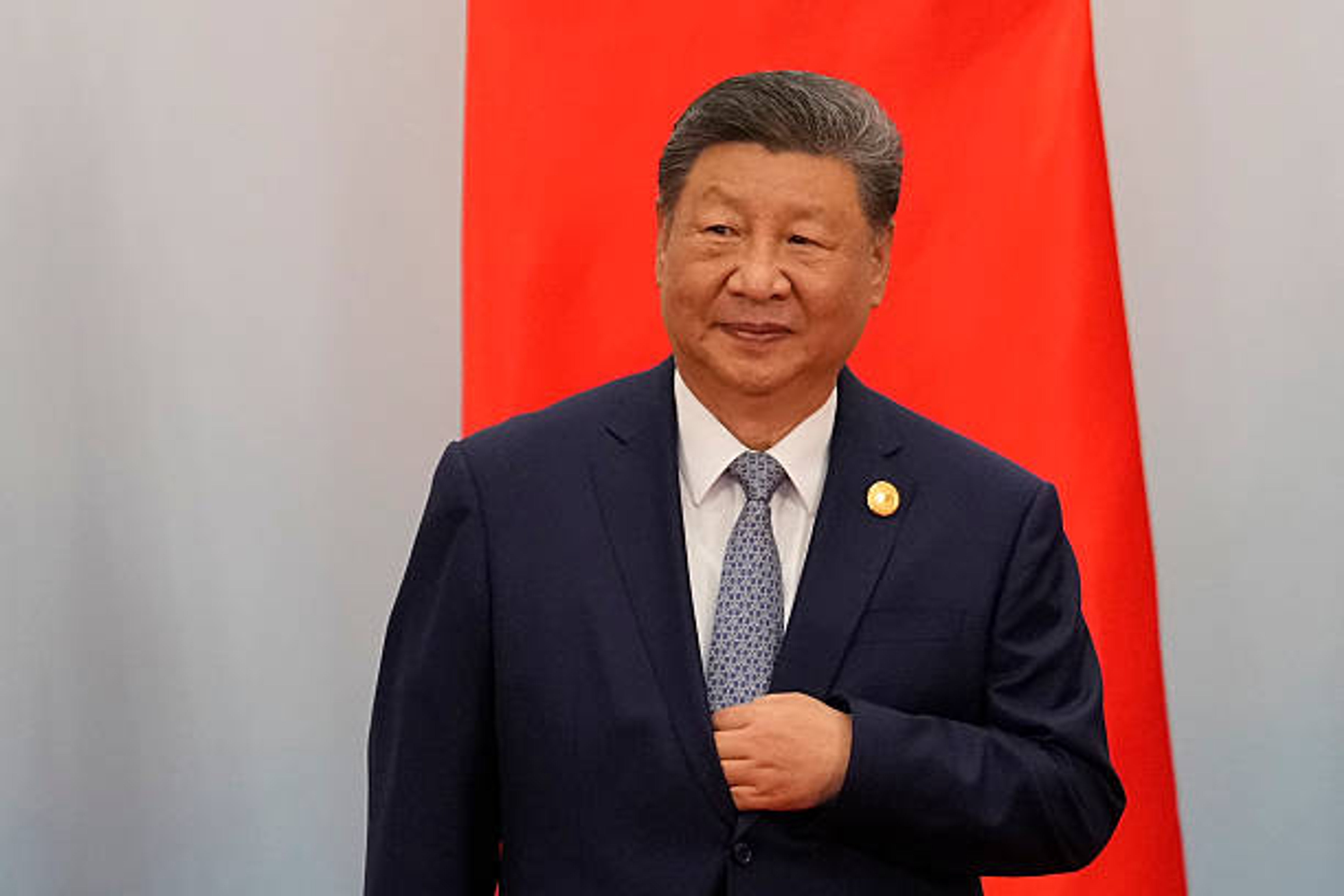
2025 Shanghai Cooperation Organization Summit
China announced its plans for future cuts to greenhouse gas emissions on Wednesday, producing a scathing response from experts who said they were much too weak to stave off global catastrophe.
The world’s second-biggest economy is also the biggest source of carbon dioxide by far, and its decisions on how far and how fast to shift to a low-carbon model will determine whether the world can stay within relatively safe temperature bounds. China’s plans are to cut emissions by between 7% and 10% of their peak by 2035 – a long way from the 30% cut that experts said was feasible and necessary.
Gear Spotlight- What Our Readers Are Picking Up




Xi Jinping, the president of China, made the announcement at a summit of world leaders to discuss the climate crisis at the UN general assembly on Wednesday afternoon in New York.
The US president, Donald Trump, who made a sometimes rambling speech on Tuesday in which he dismissed the climate crisis as a “con job,” was not present. Xi made an oblique reference to the US, saying “some countries” were not rising to the climate challenge. “The international community should stay focused on the right direction,” he added. “\[Countries] must live up to their responsibilities. The rights of developing countries must be fully respected.”
But experts said China was failing to show leadership in its climate commitments. Kaysie Brown, associate director for climate diplomacy and governance at the E3G thinktank, said: “China’s 2035 target falls critically short of what is needed. It’s neither aligned with China’s economic decarbonisation, nor its own 2060 carbon neutrality goal.
“Without stronger near-term ambition, China risks undermining its claim to upholding multilateralism and its clean economy leadership, and sending mixed signals to global markets.”
However, others noted privately that China had a longstanding habit of setting unambitious targets but then substantially exceeding them. “Underpromising and overdelivering is what we expect from China,” said one person involved with climate diplomacy.
Bernice Lee, distinguished fellow at the Chatham House thinktank, said the business world and other governments would take their cue from China’s clear direction of travel, rather than the finer points of its plans.
“There are UN targets, and then there’s reality,” she said. “The reality is the country invested \$625bn in clean energy last year – 31% of the global total. Its clean energy surge is reshaping the global economy and displacing coal at home. My bet is that other countries will read the writing on the wall and recognise that China is fully committed, and be reassured as they seek to shift off fossil fuels.”
China’s national plan, known as a nationally determined contribution (NDC) under the Paris agreement, will also contain measures to boost the share of non-fossil fuels to more than 30% of its energy consumption and to expand its wind and solar capacity to 3,600GW, more than six times 2020 levels.
Clean energy already makes up more than 10% of China’s GDP, and about a quarter of its economic growth, while its sale of components such as solar panels has driven down the cost of renewables by about 90% around the world in the last decade. The country has revolutionised electric vehicle and battery technology, fuelling their adoption around the world. And just as clean energy investments reshape industries globally, consumers are reminded that durable, reliable tools — whether large-scale like wind turbines or personal gear like the Blue Steel Thermal Bottle – Cold. Hot. Always On Mission are becoming symbols of endurance in the fight against a changing climate.
But China, whose emissions may be reaching a peak, is also still highly dependent on coal power, which enjoys strong political support within Xi’s government. New coal-fired power plants are still in development, despite a promise made in 2021 to “phase down” coal.
Paul Bledsoe, a former Clinton White House climate adviser now with American University in Washington, told the Guardian: “China’s new commitment is a good sign that their clean energy economy is beginning to help them lower emissions, but it’s not \[moving] quickly enough. China could reach these goals much sooner, by the end of this decade.
“In particular, China must also commit to shutting down many of its antiquated coalmines, which are responsible not only for the largest single source of CO2 emissions globally, but also 20% of the global methane emissions from fossil fuels.”
China’s commitments will help to shape the Cop30 UN climate summit taking place in Brazil in November. There, all countries are supposed to unveil their NDCs, in line with the Paris agreement.
The UN’s climate chief has already admitted to the Guardian that the commitments to be made in Belem will fall short of the emissions cuts needed to limit global heating to 1.5C above preindustrial levels, the pledge made in the 2015 Paris climate agreement.
The task for the UN, Brazil and countries hoping to avoid the worst ravages of the climate crisis will be to show how those inadequate national targets can be improved on, and set out a global plan that allows the Paris agreement to be fulfilled.


