
Cart
0
Military Leaders Warn of Readiness Risks
US military leaders warn that flat defense spending in a temporary budget will harm readiness and modernization efforts, posing risks to national security.
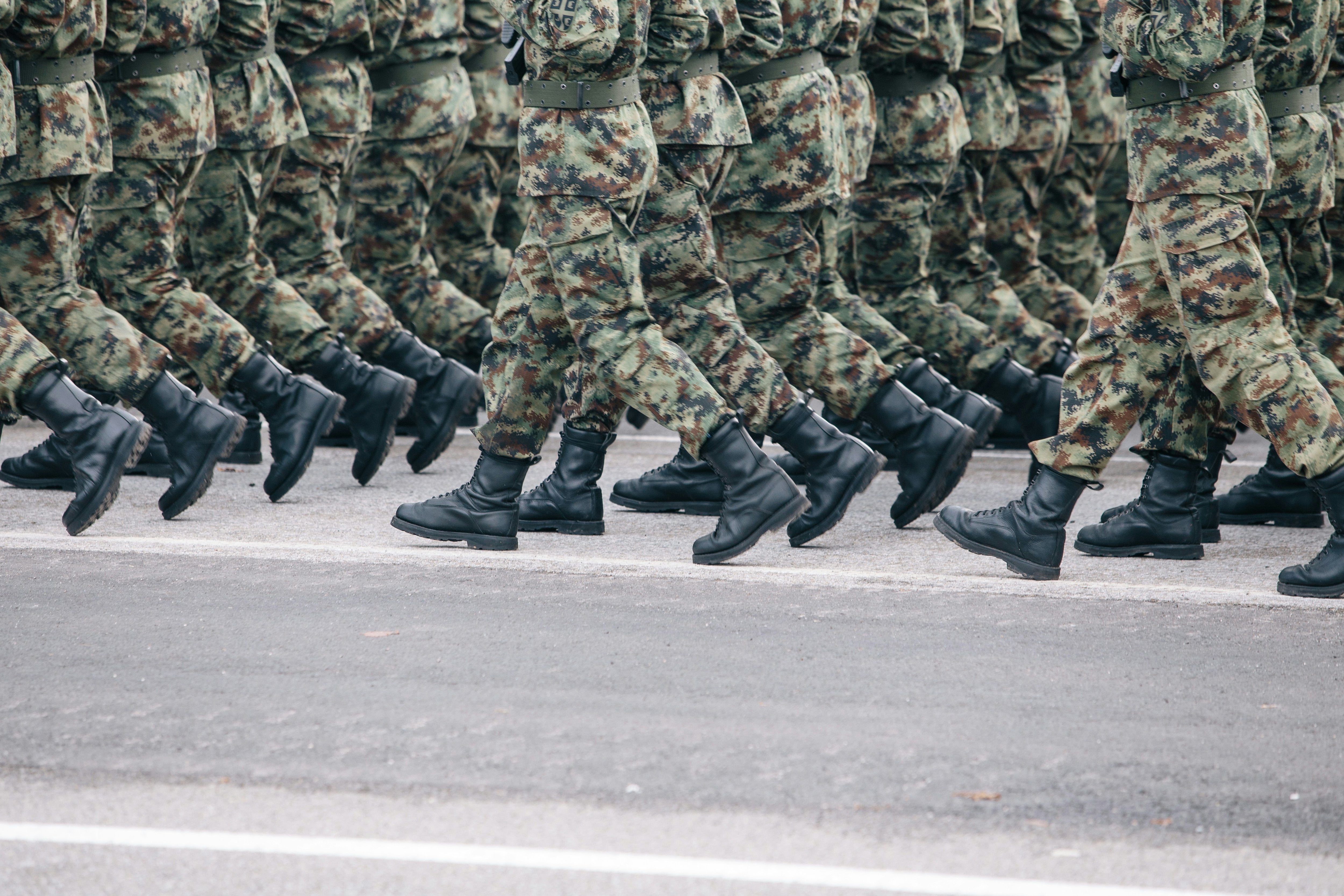
Soldiers dressed in army camouflage march in formation (@Fliip Andrejevic) (@Unsplash)
Military service leaders testified before senators on Wednesday, warning that a temporary budget keeping defense spending largely flat would harm readiness and modernization efforts. The vice chiefs of the Army, Navy, Marine Corps, and Air Force emphasized the need for additional funding or flexibility to shift money and cover priorities.
The House-passed bill would increase defense spending by $6 billion and trim $13 billion in non-defense spending. However, this change is relatively flat compared to the overall $1.7 trillion discretionary spending. The legislation now moves to the Senate, which has not passed a defense spending bill this year, instead relying on a full-year continuing resolution.
Gear Spotlight- What Our Readers Are Picking Up




Gen. James Mingus, vice chief of staff of the Army, stated that the current budget cannot afford a large, ready, and modern force simultaneously. He warned that the Army will face real-world battlefield consequences if it doesn't invest in necessary capabilities and training.
Other service leaders echoed Mingus' concerns, highlighting shortfalls in shipbuilding, maintenance, and sustainment affecting the Navy and Marine Corps. Adm. James Kilby noted that this would slow shipbuilding, including amphibious warships. The Marine Corps reported that only 13 of the Navy's 32 amphibious ships were available for use as of Wednesday morning.
The Air Force also expressed concerns, with Lt. Gen. Adrian L. Spain stating that the continuing resolution would affect combat readiness by approximately $4 billion. President Donald Trump and Defense Secretary Pete Hegseth have emphasized the importance of military readiness and lethality, but the government faces drastic cuts in spending and personnel driven by the Department of Government Efficiency.
Senators acknowledged the challenges posed by the continuing resolution but provided no clear answer on whether flexibility would be built into the spending bill. Sen. Dan Sullivan noted that a government shutdown would be worse, while Sen. Mazie Hirono questioned the deployment of active-duty forces to the southern border and its impact on training and readiness.


