
Cart
0
Air Force Faces Scrutiny Over Cancer Clusters in Missileers. As Toxic Exposure Fears Grow
U.S. Air Force is investigating potential cancer clusters amongst missileers exposed to toxic chemicals at nuclear launch sites. Veterans push for accountability and health recognition.
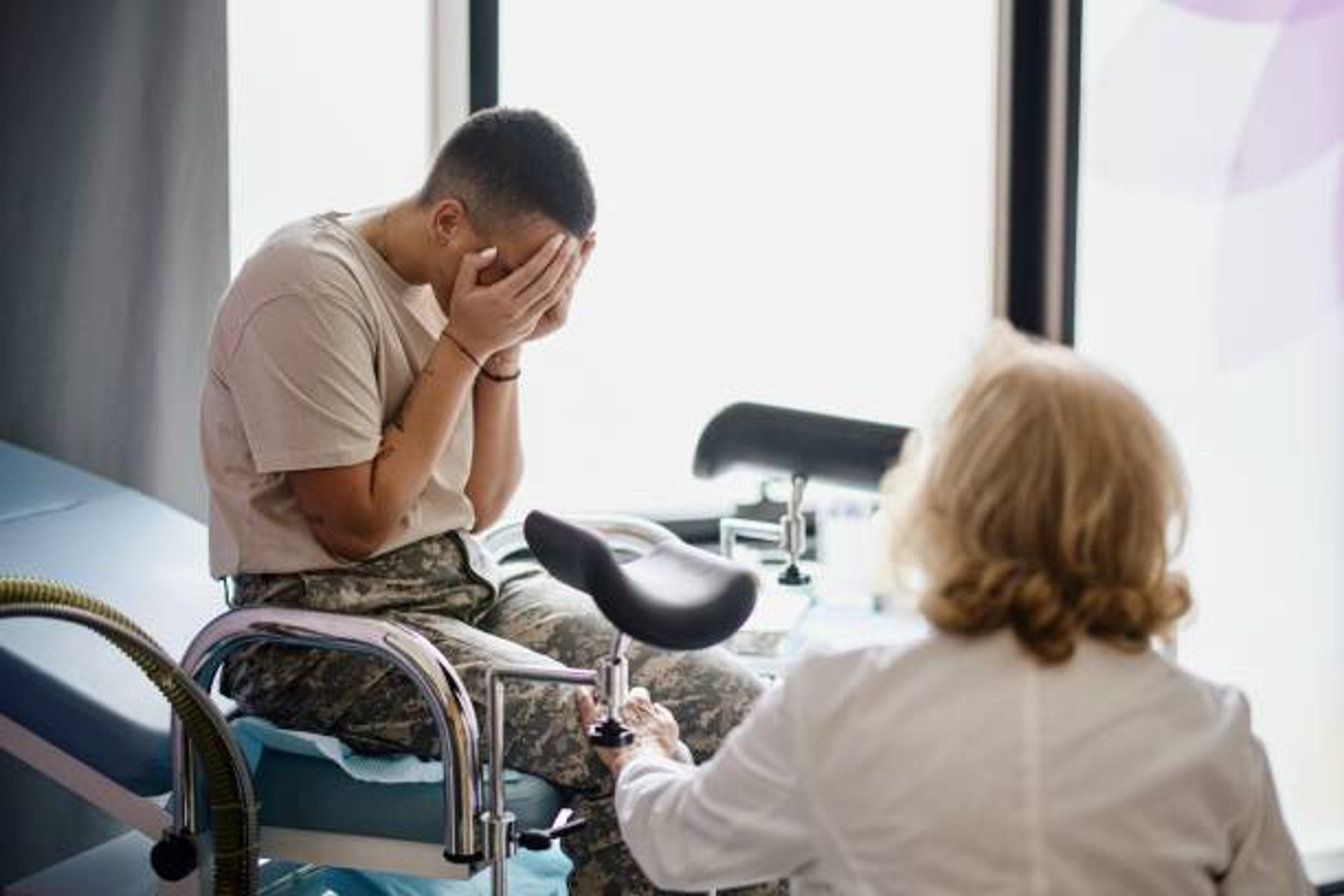
Healthcare worker giving support and love to a soldier patient - stock photo by getty images
At a memorial service in 2022, Air Force veteran Capt. Monte Watts met a fellow former Minuteman III nuclear missile operator. Who told him she had non-Hodgkin lymphoma. That same day, Watts learned that he, too, had chronic lymphocytic leukemia. A type of non-Hodgkin lymphoma.
Within the missileer community, concerns had long existed that their underground workplaces might be unsafe. In 2022, Lt. Col. Danny Sebeck, a former Air Force missileer who later joined the U.S. Space Force, compiled data. Showing a potential cancer cluster among those who served at Minuteman III launch control centers on Malmstrom Air Force Base in Montana. Sebeck identified 36 former workers diagnosed with cancer, including 11 with non-Hodgkin lymphoma, three of whom had died.
Gear Spotlight- What Our Readers Are Picking Up



The Air Force quickly launched a sweeping investigation into cancer cases and environmental conditions. At three intercontinental ballistic missile bases and a California launch site. The research, expected to be completed by the end of 2025, aims to determine if the missileers’ illnesses are linked to their service.
Former missileers welcomed the quick response but remain concerned the study’s broad scope could dilute results. And fail to establish a clear link necessary for Department of Veterans Affairs benefits. Many veterans recall past struggles to gain recognition for illnesses tied to toxic exposures. Like Agent Orange, Camp Lejeune’s contaminated water, and burn pits in Iraq and Afghanistan.
Earlier Air Force studies in 2001 and 2005 had declared the missile launch centers “safe and healthy working environments.” However, current Air Force Global Strike Command leaders say those studies may not have been comprehensive enough. Sebeck, who codirects the Torchlight Initiative, an advocacy group for missileers, told lawmakers that the Defense Department failed to accurately track environmental exposures. Making it difficult for veterans to prove their claims.
Polychlorinated biphenyls, or PCBs, synthetic chemicals once used in missile control systems, have been banned since 1979 for being toxic and carcinogenic. The Air Force’s Missile Community Cancer Study is examining 14 types of cancers across the missile community and comparing them to general U.S. rates while analyzing environmental factors at Malmstrom, F.E. Warren, Minot, and Vandenberg bases.
So far, early findings show no statistically significant increase in cancer deaths compared to the general population. However, preliminary data did note isolated elevations in breast and prostate cancers. Which were later ruled out after more analysis. Air Force officials caution that these results are based on only half the available data.
Col. Richard Speakman, leading the Air Force School of Aerospace Medicine, said the final report will include state and federal data to better understand potential exposure links. He noted that while the health risk to missileers is considered low, it is “not zero.”
Rep. Don Bacon of Nebraska has called for the National Academies of Sciences, Engineering, and Medicine to conduct an independent review. Emphasizing the need for outside experts to ensure credibility.
Sebeck added that bases like Malmstrom contained types of PCBs not found at others. And that benzene exposure from cigarette smoke, exhaust, and fuel remains a major concern.
Watts, whose case has been highlighted by the Torchlight Initiative, said he once watched workers in hazmat suits collect water samples while he and his crew stood nearby in regular uniforms. “Do you see anything wrong with this?” he recalled asking his commander.
Today, launch centers have improved air systems and discontinued practices such as burning coded materials indoors. Sebeck has urged Congress to expand the PACT Act to include missileers and others potentially exposed to toxins. “I can find my missileer buddies in the oncology offices,” he said. “We are sitting in the same chairs getting chemotherapy.”
For veterans who continue to live with uncertainty about their health, preparedness has taken on new meaning. Many have turned to keeping essential emergency gear on hand, such as the 142in1 Tactical Survival Kit – because Mother Nature doesn’t care about your DD214. A compact all-in-one kit designed for those who know the value of readiness both in and out of uniform.
Air Force Global Strike Command spokesperson Maj. Lauren Linscott said the service remains committed to supporting affected personnel. And is focused on completing a rigorous, peer reviewed study.
The Air Force plans to release its final epidemiological report by the end of 2025.


