
Cart
0
NATO Summit Opens in Netherlands Amid Push for 5% Defense Spending and Ongoing Global Tensions
NATO leaders gathered in the Netherlands to debate a proposed 5% defense spending goal amid tensions over U.S. strikes on Iran, Ukraine's sidelined NATO bid, and calls for continued support against Russia.
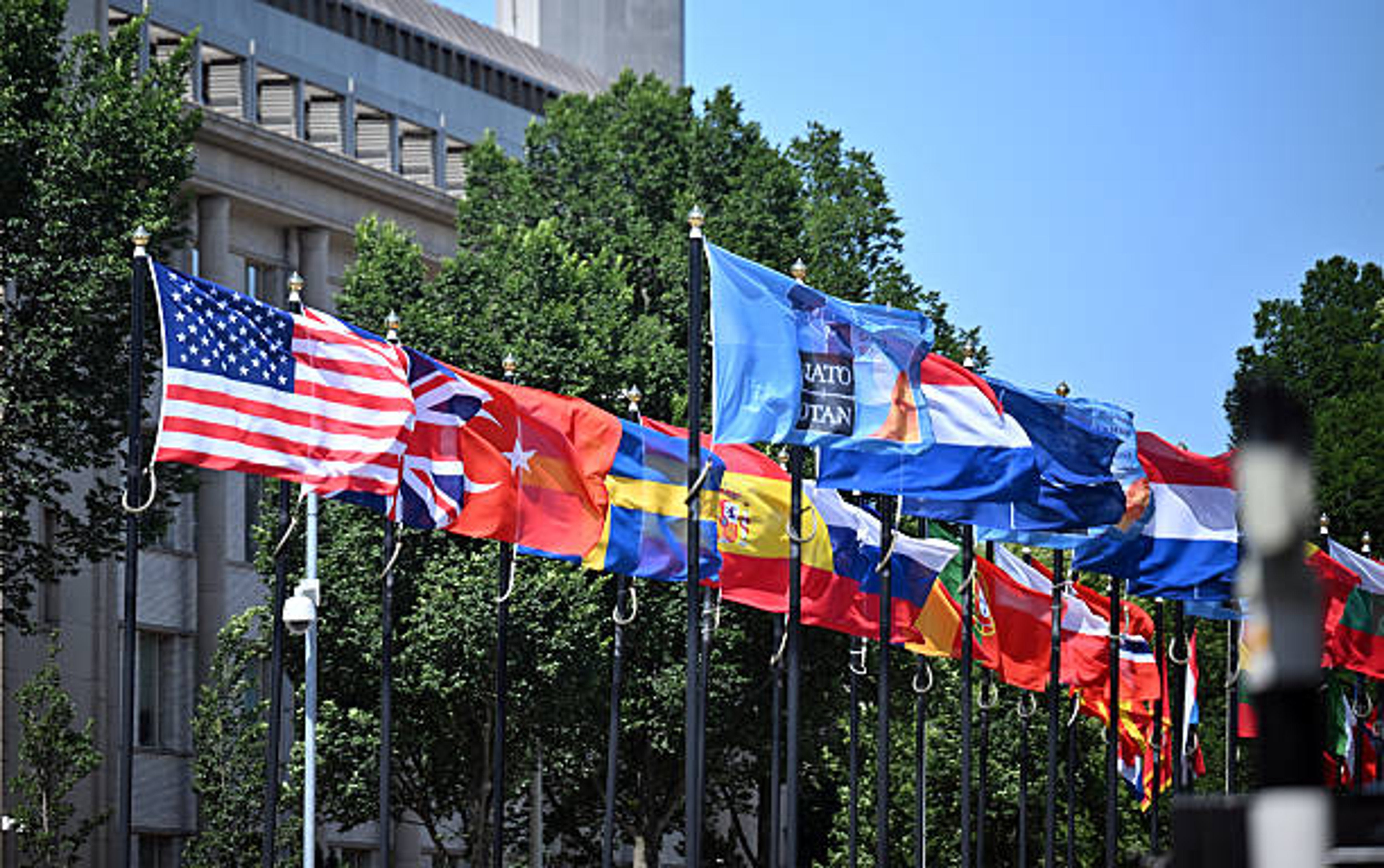
THE HAGUE, NETHERLANDS - JUNE 23: A general view of the street as preparations continue ahead of the NATO Leaders' Summit to be held at the World Forum in The Hague, Netherlands, on June 23, 2025.
NATO leaders convened in the Netherlands on Tuesday for a historic two-day summit that could either unify the alliance around a new defense spending target or expose widening divisions among the 32 member nations. The meeting comes at a time of mounting geopolitical tensions, including recent U.S. strikes on Iran and the protracted war in Ukraine.
Allies are expected to endorse a proposed goal of allocating 5% of their gross domestic product (GDP) to defense spending by 2035. However, some countries, including Spain and Slovakia, have expressed reservations. Spain has called the goal “unreasonable,” while Slovakia insists it will decide independently how to meet the target. President Donald Trump has also stated that the U.S. should not shoulder the burden alone.
Gear Spotlight- What Our Readers Are Picking Up



“We are not living in happy land after the Berlin Wall came down. We are living in much more dangerous times,” NATO Secretary-General Mark Rutte said ahead of the summit. “We have to make sure that we defend our beautiful way of life and systems and our values.”
Several key NATO members — including the United Kingdom, France, Germany, and host nation the Netherlands — have already committed to the 5% goal. Eastern European nations closer to Russia and Belarus had previously pledged support for the initiative. “I think it’s going to be successful. We’ll see,” Trump said as he departed the U.S. for the summit.
While the summit was initially expected to highlight Trump’s return to NATO and his role in pushing for the spending pledge, attention has shifted to the U.S. strikes on three Iranian nuclear facilities and Trump’s unexpected announcement of a “complete and total ceasefire” between Israel and Iran. The developments have overshadowed Ukraine, a dominant issue at previous summits.
Nevertheless, Rutte emphasized NATO’s capacity to address multiple crises. “If we would not be able to deal with ... the Middle East, which is very big and commanding all the headlines, and Ukraine at the same time, we should not be in the business of politics and military at all,” he said.
Ukrainian President Volodymyr Zelenskyy arrived in The Hague for meetings with European leaders, although he was notably absent from the summit’s main leaders’ session focused on finalizing the 5% GDP agreement. During a meeting with Dutch caretaker Prime Minister Dick Schoof, neither leader explicitly mentioned NATO. Ukraine’s bid to join the alliance has been effectively frozen under Trump’s administration.
“Let me be very clear, Ukraine is part of the family that we call the Euro-Atlantic family,” Schoof told Zelenskyy. In response, Zelenskyy said he envisioned Ukraine’s future in peace and as “a part of a big family of EU family.”
Schoof also announced a new aid package for Ukraine, including 100 radar systems to detect drones and plans to manufacture drones in the Netherlands using Ukrainian specifications.
The United States has not made any new public commitments of support for Ukraine since Trump returned to office six months ago. In meetings with Rutte and top European Union officials, Zelenskyy urged European nations to invest in Ukraine’s defense industry, which he said is capable of producing weapons and ammunition faster and at lower cost than elsewhere in Europe.
“No doubt, we must stop \[Russian President Vladimir] Putin now and in Ukraine. But we have to understand that his objectives reach beyond Ukraine,” Zelenskyy warned. He supported NATO’s proposed 5% spending target, calling it “the right level,” and thanked the allies for their continued unity. “I think this is the most important thing,” he said.


