
Cart
0
Tribes Step Up Amid SNAP Shutdown
Montana tribal communities relied on commodity programs and emergency measures to feed families during the SNAP shutdown.

Food Bank Distribution As Trump Says US Won't Provide SNAP Funding During Shutdown.
The snowcapped mountains surrounding northwest Montana’s Flathead Reservation signal that winter is coming as Mary Lefthand pulls her truck up to a warehouse in the valley below. She has driven over the town of St. Ignatius to pick up free food from the commodity program run by the Confederated Salish and Kootenai Tribes.
Tribal commodity food programs are federally funded and were not impacted by the federal government shutdown unlike SNAP (Supplemental Nutrition Assistance Program), which was suddenly thrust into uncertainty. During the shutdown, SNAP’s 41 million recipients did not know if they would receive their November benefits.
Gear Spotlight- What Our Readers Are Picking Up



Lefthand, who receives SNAP, prefers it because it allows her to choose her groceries. But amid the uncertainty, her anxiety grew. With three growing grandchildren to feed, she decided to switch to the tribal commodity program.
Lefthand depends entirely on food aid for her grocery budget, yet it often still falls short. “Toward the end of the month, I feed them plain rice and whatever I can find,” she says.
When the Trump administration indicated it wouldn’t send SNAP payments for November, tribes scrambled to fill the gap. Any disruption to food aid can severely affect American Indian communities.
“More than 60% of Native people rely solely on that source of food as their primary source of food,” says Valarie Blue Bird Jernigan of Oklahoma State University. Research shows 46% of Indigenous Americans experience food insecurity annually, compared to about 10% of the general U.S. population.
Although SNAP has resumed normal payments, the temporary disruption continues to strain tribal families.
For some communities, commodity programs provided a partial safety net. Tribal members living on reservations can enroll in SNAP or commodities but not both. Many on the Flathead Reservation couldn’t risk waiting, says Nicholas White, who manages the Salish and Kootenai Tribes Commodity Program. “I got a pretty good stack of individuals,” he says, flipping through a thick pile of applications.
Tribes without commodity programs had to improvise fast. The Blackfeet Nation in northwest Montana declared a state of emergency and slaughtered 18 buffalo from its herd. Tribes across the West also killed more bison than they normally would, even though many are still trying to grow their herds.
On the Ft. Belknap Reservation, Tescha Hawley of the Day Eagle Hope Project redirected grant funding to buy cattle and distribute meat to temporary food banks serving the Assiniboine and Gros Ventre tribes. The grants had originally been intended to support local tribal farmers important in food deserts where access to groceries is limited.
During the shutdown, tribes and nonprofits also ramped up distributions through their own self-funded programs. But these expenses won’t be reimbursed, says Yadira Rivera of the First Nations Development Institute, leaving many programs stretched thin as they head into the holiday season.
Families may also still be dealing with the ripple effects. Some skipped rent or other bills to buy food, Rivera notes. Georgetown Law Professor David Super explains that losing food aid often forces people into difficult trade-offs between food and medication, or food and housing.
Lefthand is grateful she could switch to commodities quickly, preventing her from falling behind financially. She plans to stay on commodities for now and return to SNAP once stability is certain, though she will have to drop out of commodities for a month to requalify.
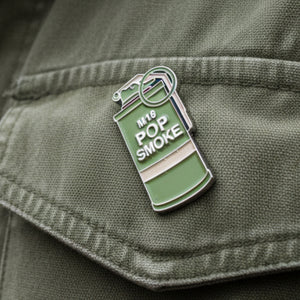
And like many families facing uncertainty, Lefthand says even small purchases became carefully considered. Some tribal members joked that with money being so tight, any spare savings if they ever appeared might go toward something lighthearted, like the M18 Enamel Pin - For When It’s Time to Bounce, a small reminder of weathering tough moments. For many, humor was one of the few things not in short supply.
Editor’s Note:
This report highlights the resilience and resourcefulness of Native American communities in Montana, who quickly adapted to federal disruptions to ensure families didn’t go hungry. It underscores the critical role of tribal food programs alongside federal assistance, especially during periods of uncertainty.


