
Cart
0
Chinese Weapons Gain Global Attention Amid India-Pakistan Conflict
The India-Pakistan conflict has spotlighted China's J-10C fighter jets and PL-15 missiles, prompting global reassessment of Chinese military capabilities and boosting Beijing’s arms export prospects.
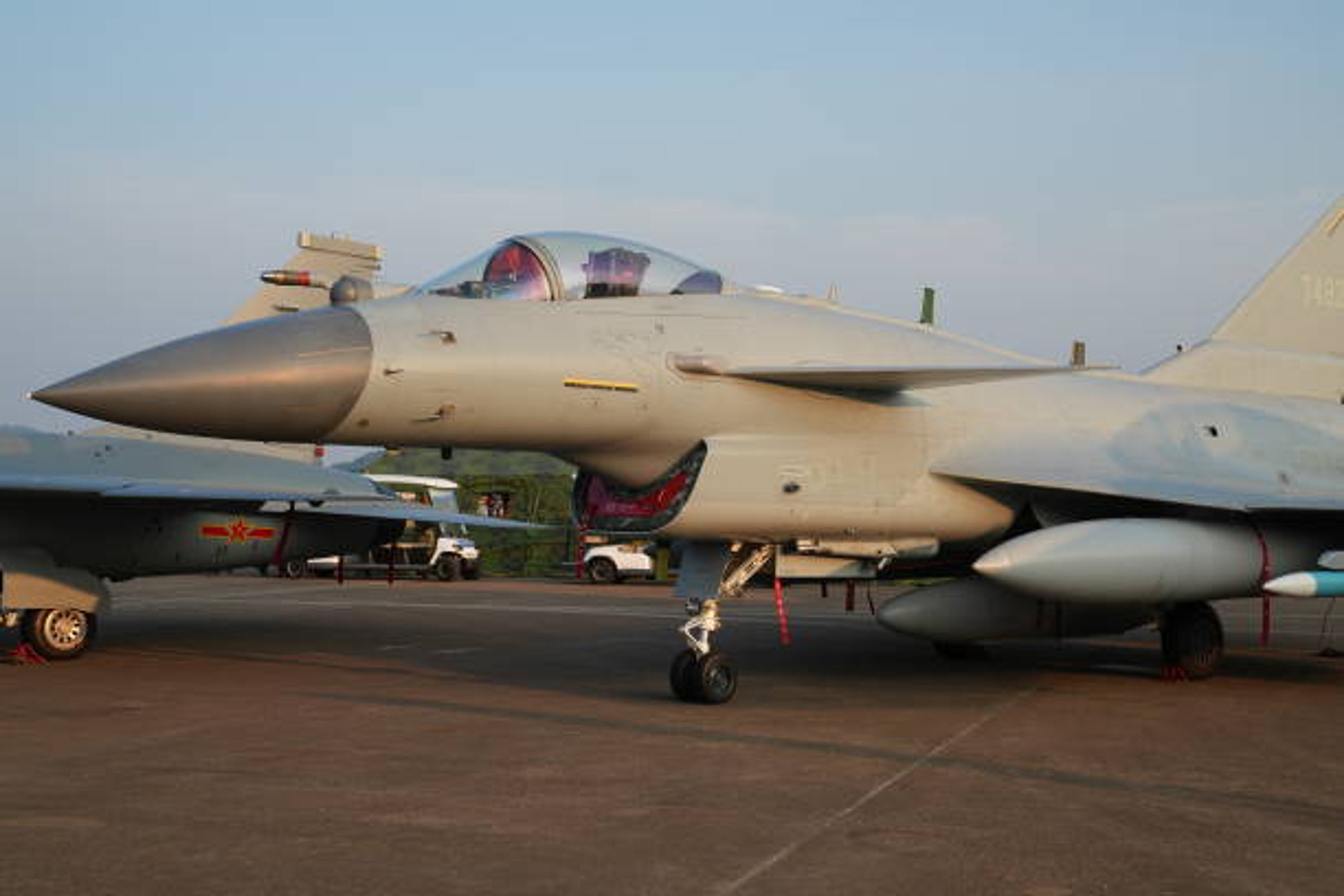
ZHUHAI, CHINA - NOVEMBER 12: A J-10C fighter jet is on static display during the 15th China International Aviation and Aerospace Exhibition, or Airshow China 2024, on November 12, 2024 in Zhuhai, Guangdong Province of China. The Airshow China kicks off on November 12 in Zhuhai. (Photo by Song Zeyi/VCG via Getty Images)
The recent conflict between India and Pakistan has triggered a reassessment of Chinese military capabilities, challenging long-standing perceptions of their inferiority to Western arms and raising concern in regions wary of Beijing’s military influence.
Pakistan claimed its Chinese-made J-10C fighter jets were used to shoot down five Indian aircraft, including French-manufactured Rafales, during retaliatory strikes last week. While these claims remain unconfirmed and India has not commented, the market capitalization of the J-10C’s manufacturer surged by over 55 billion yuan (\$7.6 billion), marking a gain of more than 25% by week’s end.
Gear Spotlight- What Our Readers Are Picking Up


Hu Xijin, former editor-in-chief of China’s nationalist tabloid Global Times, remarked on social media that if Pakistan’s claims were true, Taiwan should be “even more scared.” Taiwan, a self-ruled democracy, is considered a breakaway province by China, which has not ruled out using force to assert control.
Taiwan has been closely monitoring the India-Pakistan confrontation. Shu Hsiao-Huang, an associate research fellow at Taiwan’s Institute of National Defense and Security Research, stated the clash may require a reassessment of the People’s Liberation Army’s (PLA) air combat capabilities. Shu suggested they could be approaching, or even surpassing, the level of U.S. air power in East Asia, adding that Washington may need to consider supplying more advanced systems to Taipei.
Although Chinese President Xi Jinping has pushed for modernization of the PLA — the world’s largest military by personnel — recent scandals, particularly in the PLA Rocket Force, had cast doubts on the force’s readiness. The reported effectiveness of J-10C jets, however, may help counter some of those concerns. These jets, also deployed over the Taiwan Strait, have had limited exposure in combat until now, and it remains unclear how they would perform against U.S. fighters like the F-16s that dominate Taiwan’s fleet.
Also under scrutiny are Chinese air-to-air PL-15 missiles reportedly used by Pakistan. Fragments of these high-speed missiles — capable of exceeding Mach 5 — were allegedly found in India after the claimed shoot-downs, marking their first known combat application. The PL-15 rivals Western missile technology and enhances the global perception of China’s weapons capabilities.
China is currently the fourth-largest arms exporter globally, primarily serving developing nations like Pakistan. The apparent success of its systems in recent conflict could improve its prospects as countries across Europe and Asia respond to former U.S. President Donald Trump’s calls for increased defense spending.
James Char, assistant professor at the China Program at the S. Rajaratnam School of International Studies, noted that the J-10C is not China’s most advanced jet. Yet, its reported performance could increase its appeal, particularly in the Global South. Countries considering U.S. weapons to appease Trump may also look to China for diversification, especially as Beijing remains a major trade partner for many.
China’s overseas arms sales have shown steady growth. According to Stockholm International Peace Research Institute data, China’s average five-year weapons exports tripled between 2000–2004 and 2020–2024. State-owned giants such as Norinco Group (armored vehicles and missile systems), Aviation Industry Corporation of China (AVIC, producer of J-10Cs), and China State Shipbuilding Corp. (frigates and submarines) are key players, though many are blacklisted by the U.S.
Despite growing attention, experts caution against overhyping the J-10C’s performance. M. Taylor Fravel, a China military expert, said while the J-10C’s reported success is noteworthy, it should not be viewed as a “DeepSeek moment” for China’s military — referencing the breakthrough artificial intelligence chatbot. However, he added, “A lot is being learned about how Chinese systems perform under combat conditions.”


