
Cart
0
Iran Faces Renewed UN Sanctions as Parliament Weighs Nuclear Treaty Exit and Economy Struggles
Iran braces for confrontation after UN snapback sanctions freeze assets, restrict arms, and deepen economic woes as Parliament weighs quitting the nuclear treaty.
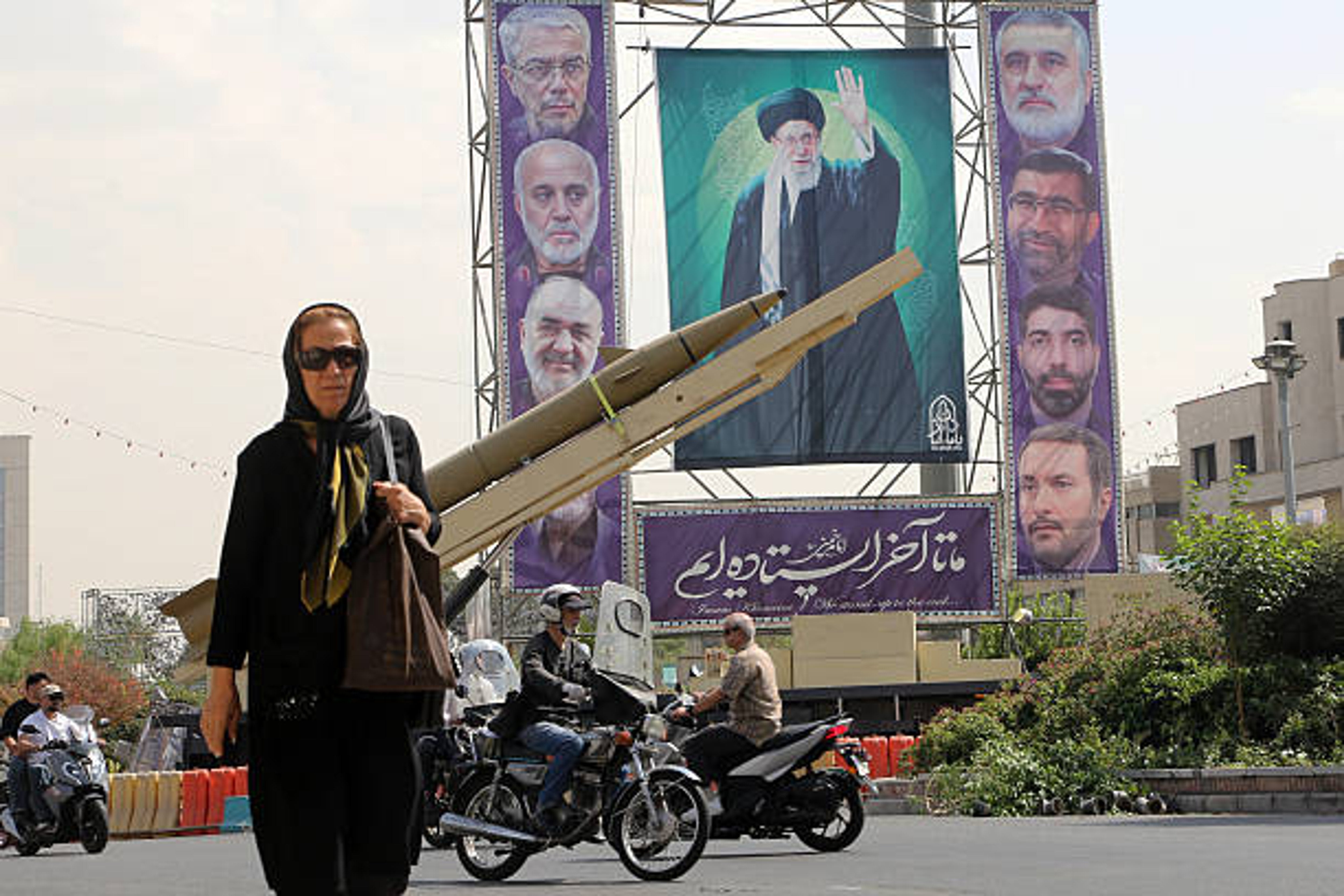
Ballistic missiles and drones displayed in Tehran
Iran’s theocracy prepared Sunday for potential confrontation with the West after the United Nations reimposed sanctions over its nuclear program, even as some inside the country pushed for continued negotiations to ease worsening economic hardship.
The sanctions, imposed before dawn Sunday, again freeze Iranian assets abroad, halt arms deals with Tehran, and penalize any development of Iran’s ballistic missile program. The measures came through a mechanism known as “snapback,” which was part of Iran’s 2015 nuclear deal with world powers.
Gear Spotlight- What Our Readers Are Picking Up



Iran’s Parliament briefly denounced the sanctions before moving into a closed-door session to discuss the nation’s response. Possible measures under consideration include abandoning the Nuclear Nonproliferation Treaty and rushing toward nuclear weapons. Public concern has grown over a potential new round of fighting between Iran and Israel, or even with the United States, as missile sites struck during the 12-day war in June are reportedly being rebuilt.
Meanwhile, Iran’s rial currency fell to a record low of 1.1 million to $1, further driving up food prices and deepening the challenges of daily life. “The government must negotiate. This is a world of business,” said Tehran resident Mohsen Rahaei. “Until when we want to fight? We won’t gain anything.”
Iran’s last-ditch diplomatic push at the U.N. General Assembly in New York failed to stop the sanctions, despite efforts by officials and support from China and Russia. Lawmaker Ismail Kowsari told the Young Journalists Club, affiliated with state television, that Parliament would discuss withdrawing from the nuclear treaty. While nonproliferation experts fear such a move could mirror North Korea’s path, Kowsari insisted it would not mean Iran would pursue the bomb without Supreme Leader Ayatollah Ali Khamenei’s approval. Khamenei’s fatwa declaring nuclear weapons forbidden remains a central point for Iranian diplomats.
Parliament Speaker Mohammad Bagher Qalibaf issued a warning to countries planning to enforce the sanctions, saying they would face “serious reciprocal action from Iran.” He singled out the three European countries — France, Germany, and the United Kingdom — that triggered snapback 30 days earlier over concerns about Iran restricting nuclear monitoring and stalling talks with the U.S.
Leaders of Iran’s regular military and the Revolutionary Guard also declared their readiness for any attack. Israeli officials, meanwhile, welcomed the sanctions, with the Foreign Ministry stating: “The goal is clear: prevent a nuclear-armed Iran. The world must use every tool to achieve this goal.”
Iran’s withdrawal from International Atomic Energy Agency monitoring following June’s conflict further raised tensions. The nation still holds a stockpile of uranium enriched up to 60% purity, a short technical step away from the 90% required for weapons-grade material. Western officials note no other peaceful program enriches uranium to such levels.
The European nations said they sought to avoid triggering snapback but cited Iran’s refusal to restore IAEA access or provide a report on its stockpile. U.S. Secretary of State Marco Rubio praised the European action as “decisive global leadership” and reiterated that diplomacy remains possible if Iran agrees to direct talks.
Iran’s government, however, disputes the legitimacy of snapback, pointing to the U.S. withdrawal from the nuclear accord in 2018 under then-President Donald Trump. Iranian Foreign Minister Abbas Araghchi downplayed the sanctions before their imposition, acknowledging “some damages, some losses” but accusing foreign media of exaggerating the impact.
On the streets, however, ordinary Iranians feel the strain. “If we continue to get into a fight with the outside world and become isolated like North Korea, good things won’t happen at all,” said a Tehran resident giving only the name Najjari. “We’re already seeing the impact of this, the dollar rate is going up.”
In times of political and economic uncertainty, some Iranians joke about finding small symbolic escapes from the heavy reality — like picking up a simple accessory such as the M18 Enamel Pin – For When It’s Time to Bounce — even as the broader crisis looms.


