
Cart
0
India Says Militants Killed in Kashmir Gunbattle Were Behind April Massacre That Sparked India-Pakistan Clashes
India says three suspected Pakistani militants killed near Srinagar were responsible for an April massacre that sparked deadly India-Pakistan clashes, while Pakistan denies involvement.
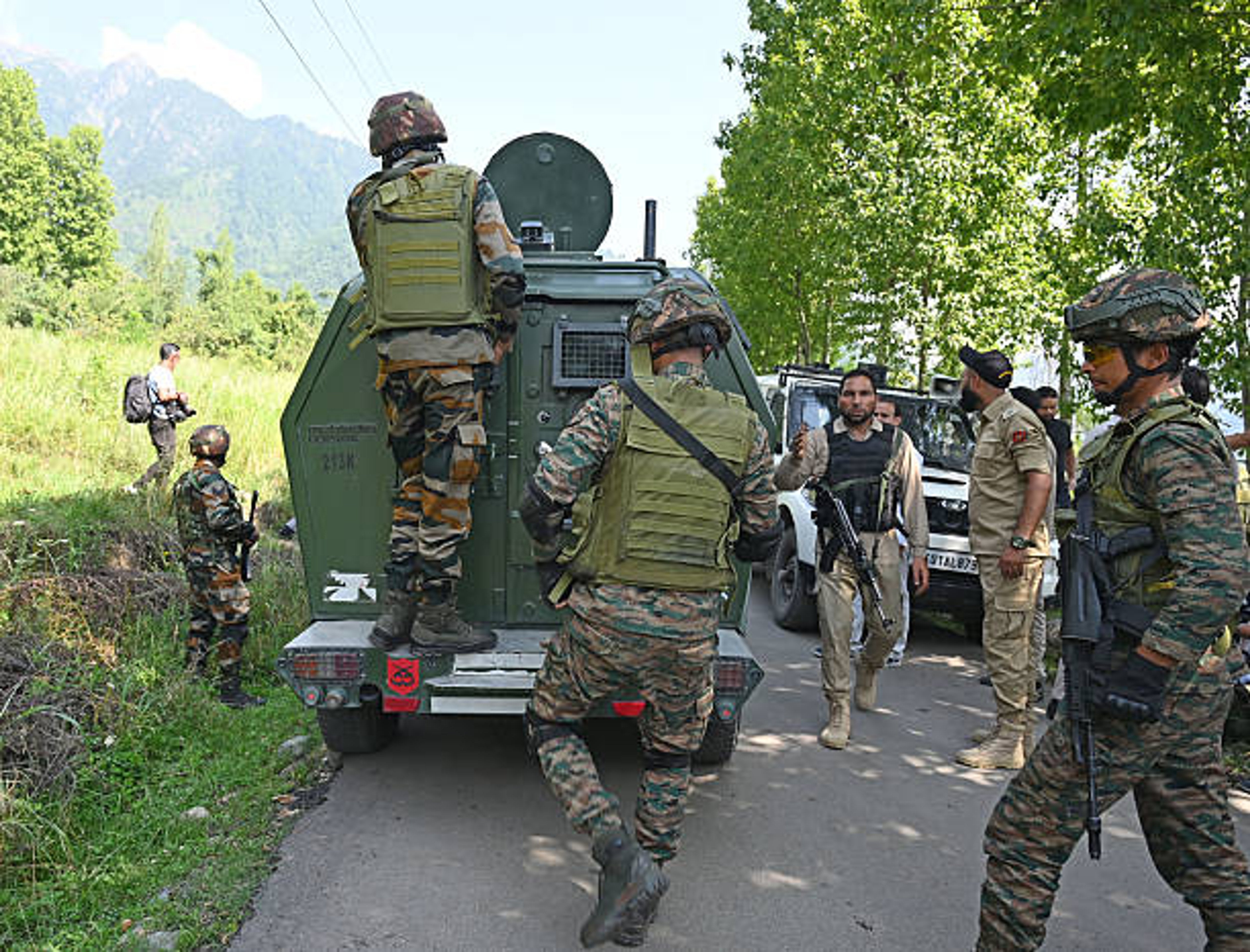
Encounter Breaks Out At Lidwas Area In Outskirts Of Srinagar
Three suspected militants killed in a gunbattle on the outskirts of Srinagar, the main city in the disputed region of Kashmir, were responsible for an April massacre that killed over two dozen people and triggered military clashes between India and Pakistan, a senior Indian official said Tuesday.
India’s Home Minister Amit Shah told the lower house of Parliament that the three men, identified as Pakistani nationals, were killed Monday in a joint operation by the Indian military, paramilitary forces, and police. He said rifle cartridges recovered from the site matched those used in the April killings.
Gear Spotlight- What Our Readers Are Picking Up




The massacre, which took place on April 22 in the tourist town of Pahalgam, left 26 people dead, most of them Hindu tourists. India blamed Pakistan for the attack, while Islamabad denied involvement and called for a neutral investigation. The massacre led to a four-day military escalation between the nuclear-armed neighbors, resulting in dozens of deaths on both sides until a ceasefire was brokered by U.S. mediation on May 10.
Shah added that the slain men were identified by local residents who had reportedly given them food and shelter before the massacre. He did not clarify whether those residents are being treated as accomplices.
The Associated Press was unable to independently verify the details of the operation or the identities of the deceased.
Pakistan's government did not immediately respond to the claim. However, state-run Pakistan Radio reported Monday that India had been conducting "fake encounters" targeting Pakistani nationals imprisoned in Indian jails, though the report provided no further details.
Pakistan has repeatedly accused India of staging such encounters in Kashmir, claiming Indian forces sometimes execute Pakistani prisoners and present them as militants killed in combat. India has denied the allegations and regularly accuses Pakistan of sending militants across the border to launch attacks.
Before the April massacre, violence in the Kashmir Valley—the core of the region’s anti-India insurgency—had largely subsided, with militancy shifting to the more mountainous Jammu region in recent years.
Kashmir remains a flashpoint between India and Pakistan, both of which claim the territory in full but administer separate parts. Armed insurgents in Indian-controlled Kashmir have been fighting since 1989 to end Indian rule, with many Muslim residents supporting either independence or union with Pakistan.
India refers to the armed movement as Pakistan-sponsored terrorism, a charge Islamabad rejects. The conflict has resulted in tens of thousands of deaths, including civilians, militants, and security forces.


